|
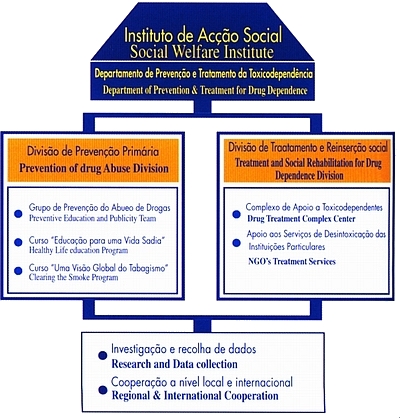
III. Drug-Dependence Prevention and Treatment Work (1) Macao Social Welfare Institute - Department for Prevention and Treatment of Drug Dependence Department
for Prevention and Treatment of Drug Dependence of the Macao Social
Welfare Institute under the government of Macao Special Administrative
Region is responsible for planning and execution work relating to
the prevention and treatment of drug dependence in an all-round way.
The general tasks are undertaken as follows: Carrying out preventive
education and publicity work; providing directly services of drug treatment and rehabilitation
work; collecting and analyzing important materials and data in the
area of drug dependence; conducting related studies and participating
in regional and international cooperation.
In
2002, Macao Social Welfare Institute made substantial achievements on the
prevention and treatment of drug dependence work. In prevention aspect,
successfully introduce the program of "Clearing the Smoke - the Quest
for the Truth about Cigarettes", and has officially promoted to the
entire middle schools in In
the same year, Macao Social Welfare Institute has done many investigation and
study work, including "The Investigation and Study on Junior College
Student and Drugs in Macao" conducted by "University of Macao -
Educational Research Center Faculty of Education"; "Street
Youngsters and Drugs Situation Investigation" conducted by "Sheng
Kung Hui North District Youth Development Centre" and "Assessment
of Drugs Abuse in Treatment and Rehabilitation Research in Macao"
conducted by "The Research Committee of Hong Kong Society for the Aid
and Rehabilitation of Drug Abusers"(SARDA). Three researches complete in
the first half year of 2003, when anti-drugs prevention and treatment work in
Prevention
of Drug Abuse Division and Treatment and Social Rehabilitation of Drug Dependence
Division under the Department for Prevention and Treatment of Drug Dependence
are responsible for overall implementation of the prevention and treatment
work. (1) Prevention of Drug Abuse Division Anti-drug
preventive education and publicity penetrate mainly in schools, communities
and families with different kinds of prevention activities, to promote
education to different social stratum public figure in the community.
Simultaneously, strengthens the drug abuse issue constantly before the public
and making constantly known to people the harmful effects of drug abuse.
Including provides "Healthy Life Education Program" to 5-12
year-old schoolchild; "Clearing the Smoke - the Quest for the Truth
about Cigarettes" to first year junior middle school students; various
type of Drug Education Talks; Training Program and Anti-Drug Abuse Hotline
and Reception Services and so on. In the year 2002, has conducted many
large-scale anti-narcotic activities, such as "International Day Against
Drug Abuse and Illicit Trafficking" series activities; "Award
Planning of Youth Anti-Drug Activity" and "Drug Wise Training
Camp", etc. In addition, disseminate anti-narcotics information and
spread anti- drug messages to the general public through mass media and
promotion materials. At the same time, impels Non-government Organizations
participate and conduct anti-drug activities, by hand in hand altogether
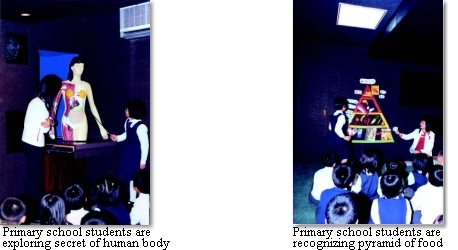
constructs a drug-free community. 1. Healthy Life Education Program The
Healthy Life Education Program is an internationally recognized program of
health awareness and drug education curriculum. In September, 2000 starts
promote in
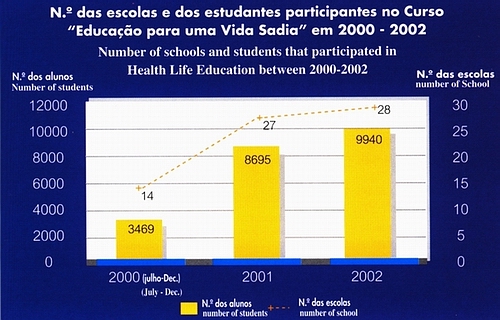
Since
September 2000, the program expanded continually with effectiveness
achievement. In 2002 , the curriculum has spread to
28 primary schools, serves altogether 9,940 primary students, approximately
1/5 of the total primary students in
In
order to encourage the schools to participate, tutors of the Healthy Life
Education provides the curriculum promotion and the introduction to
headmasters and teachers. Altogether 2 times of promoting activities were
held in 2002. 28 teachers from 16 schools participated and mainly understood
the significance of the program and visit the Healthy Life Education
classroom. In
addition, the program aroused attention and recognition of mass organizations
in the community. During summer vacation in 2002, partial associations took
the initiative to organize children attend the program; three class
activities were held with the participation of 71 children aged between 8-12. Considering the student's age difference,
tutors specially designed individual curriculum to the students with the
contents of knowing the structure of the body, the adverse effect of smoking
and practical refuse skills. Through these extra class activities, provided
opportunities to some students which the school has not participated in this
program.
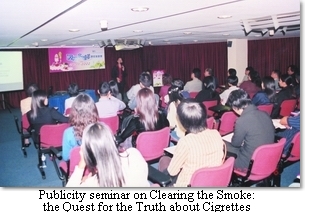
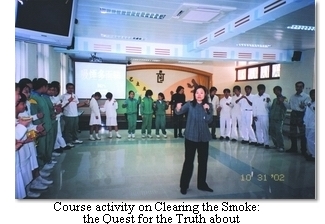
2. Program on "Clearing the Smoke
- the Quest for the Truth about Cigarettes" As
the tendency of young people smoke is growing. In order to effectively
prevents the young people to smoke and strengthens prevention smoking
education. In 2002, develops one program named "Clearing the Smoke - the
Quest for the Truth about Cigarettes". This program is base on the
foundation of Healthy Life Education Program to improve knowledge and skills
of prevention smoking education. The program was designed for the first year
of junior high school students and a new pattern of interactive teaching was
adopted by discussing the smoking-related issues with students in order to
reduce students smoking effectively. Class activities were presented to make
use of multi-media overhead projectors and computers to project carton in
school classroom. Besides introduction related smoke knowledge and influence,
also discusses the causes of youth smoking and ways to deal with this issue.
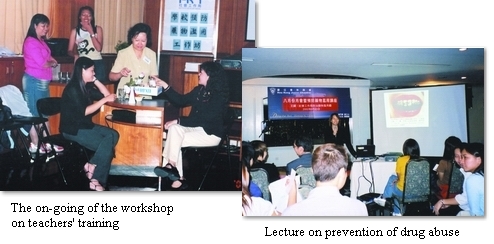
3.Anti-Drug Talks and Training Courses In
2002, 30 anti-drug talks were held with the participation of altogether 7,520
students from 21 primary and secondary schools. In regard to the community,
22 talks were offered to non-government organizations with the participation
of 763 youngsters and parents. In the same year, training courses and talks were
also organized for professionals with 168 participants, including teachers,
policeman and youth workers.
4. Activities on the International Day Against Drug Abuse and Illicit Trafficking In
respond to the International Day Against Drug Abuse and Illicit Trafficking
on June 26, the Macao Social Welfare Institute held a series of large-scale
anti-drug activities to heighten public awareness of the drug problem and to
encourage people to jointly action against drug. In 2002, the Macao Social
Welfare Institute joined with several relevant governmental and
non-governmental institutions in carrying out several large-scale anti-drug
activities, which included "Natural High Party", "Exercise for
Health and Anti-Drug Day", "Anti-Drug Exhibition and Stall
Games". The situation regarding the aforementioned activities is
introduced briefly as follows:
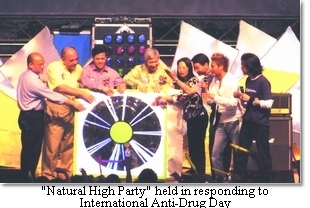
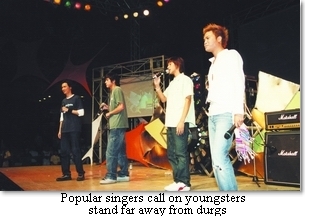
"Natural
High Party" is an activity jointly sponsored by the Macao Social Welfare
Institute and the Education and Youth Affairs Bureau, and assisted by Civil
and Municipal Affairs Bureau. The activity was produced by Macao Broadcasting
and TV Ltd. Company and held in Forum I on June 22. By appeal of healthy
popular singers and special set up dancing area to aroused young people to
understand without taking any drugs, also have the effect of happy and
cheerfulness. That night gathered both
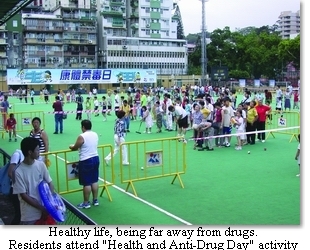
Exercise
for Health and Anti-Drug Day jointly sponsored by the Macao Social Welfare
Institute and the Macao Sports Development Board, which was held on June 23
at Tashi ground. It was an activity that publicized a healthy life and fight
against drug disaster through sport. Besides ball match, small-scale
anti-drug exercises of different types were organized. Most of the
participants were family based and about 2,000 people attended the activity
under warm and happy atmosphere.
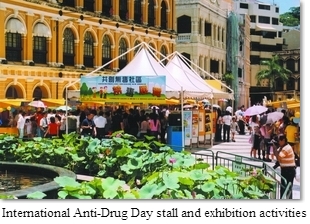
The
Macao Social Welfare Institute sponsored a dozen or so governmental and
non-governmental institutions to organize an activity with the
"Construction of Drug-Free Community" as its theme. It was held in
front of the counsel pavilion on June 26 - the International Day Against Drug
Abuse and Illicit Trafficking. To further enhanced awareness of residents
towards drug control work and anti-drug sense through pictures exhibition and
stall activities, thereby to strengthen the anti-drug preventive education
work.
5. Development of diversified anti-drug activities In
recent years, the social from all walks of life concern and attach special to
the drug issue and youngsters' drug abuse. In 2002, the Macao Social Welfare
Institute constantly held anti-drug prevention activities jointly with
governmental and non-governmental institutions; the large-scale activities
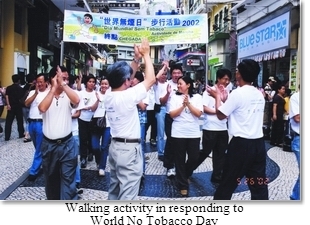
included "No Smoking Walk Movement" and "Drug Wise Training
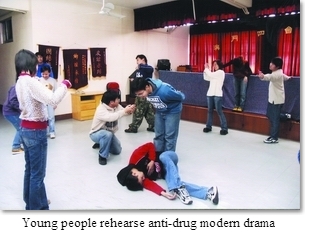
Camp". On the other hand, two programs - "Award Planning of Youth
Anti-Drug Activity" and "Anti-Drug Modern Drama" were
developed to strengthen preventive education in community and to focus on
youth with the development of diversified anti-drug activities.
Inline
with the theme of "Tobacco free sports-play it clean" on
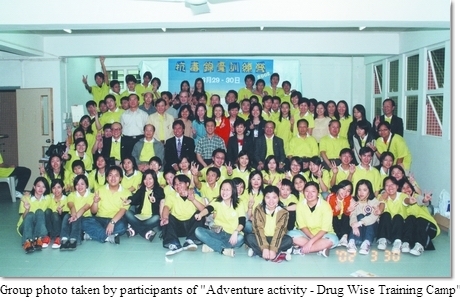
Macao
Social Welfare Institute jointly organized Drug Wise Training Camp with the
Youth Outreach and Drug Awareness Committee of the International Association
of Lions Clubs District 303 Hong Kong & Macao and the Society for the Aid
and Rehabilitation of Drug Abusers (SARDA) for the first time in March 2002.
The camp has been organized in
The
plan was officially launched in October 2002 with the goal to bring along
more young people to conduct and create various on activities anti-drug
preventive and publicity education, and encouraging them to participate in
and support anti-drug work. Many youth groups responded to the activity and
the maximum financial support was MOP$20,000 for those that were chosen in
it. The groups involved will carry out activities respectively at different
stages in 2003 and the evaluation team of the Macao Social Welfare Institute
will choose and give award to the best one among all.
Sponsored
by the Macao Social Welfare Institute, Drug-Free Play-Writing and Performance
Workshop was produced with the assistance of Drama Farm and launched in
November 2002. The main theme of it was to prevent drug abuse among youth. 25
youngsters above age 16 participated in the workshop including students,
teachers, social workers and drama workers; the duration of the workshop was
two months (20 hours). The major purpose of the activity was to disseminate
and publicize anti-drug prevention messages in the form of play writing and
performance. At the same time, the participants could consider the harmful of
drug abuse and build up positive value in the process of writing.
6. Anti-Drug Publicity Work of the Community The
Macao Social Welfare Institute enhances residents' concern about the drug
abuse issue and heightens their vigilance through publicity of exhibition,
leaflet, poster, banners, souvenir, radio and TV advertisement. 15 anti-drug
exhibitions were held respectively in schools and communities in 2002. In
addition, as long vacations are usually the high risk period of drug abuse,
the Macao Social Welfare Institute strengthens publicity promotion especially
during summer vacation and at Christmas, short anti-drug messages in TV are
broadcasted to call on youngsters to stand far away from drugs and to cherish
their brilliant lives. Moreover, the Social Welfare Institute cooperated with
the Judicial Police to print educational promotional posters at the end of
the year and jointly promoted anti-drug preventing publicity education at
recreational places and in communities. 7. Consultation Reception Services The
Division of Prevention of Drug Abuse received a total of 55 hot line inquiry
calls (781791) in 2002. Most of them inquired about issues concerning the
prevention and treatment of drug dependence, the others were from clients and
family members who sought help. Besides hot line inquiries, also provided
consultation reception services. At the same year, 23 interviews provided to
32 people, in which 17 people (53.13%) were university students and college
students. The rest were middle school students, social workers and other in -
service people. 8. Providing financial support to non-governmental institutions to hold anti-drug activities The
Division of Prevention of Drug Abuse of the Macao Social Welfare Institute
provides financial support and technical assistance to non-governmental
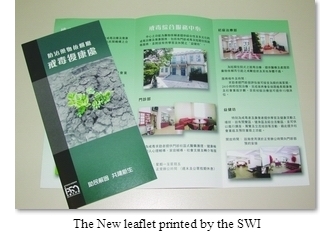
institutions in order to strengthen anti-drug prevention work of the
community, including fixed financial support provided to Youth Community
Center of YMCA and assistance to other social organizations for single
activity.
9. Future prospects It
will known to all that "Prevention is better
than cure", but how to implement the prevention work? It is necessary
for all parties to make joint efforts in carrying out the drug prevention
work and it is particularly to combine government and non-government force.
Hence, Division of Prevention of Drug Abuse will continue to spur
non-governmental organizations to hold more drug preventive activities and
sustainable develop youth companion education program. To attract more young
people to join in the rank of anti-drug issues and mobilize parents to
participate in prevention work in, so as to penetrate prevention messages
broadly in families. On the other hand, it is expected that the planned
"
|
 Teaching Situation in 2002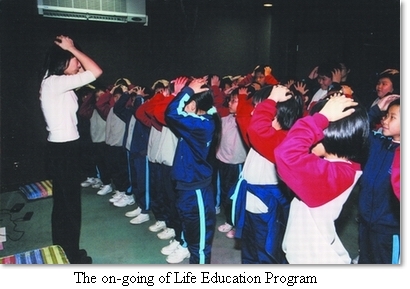
|
(2)Treatment and Social Rehabilitation for Drug Dependence Division Led
by Treatment and Social Rehabilitation for Drug Dependence Division, a three
pronged strategy was put into effect - treatment and rehabilitation service
carried out by Complex drug treatment center; technical and financial support
for non-governmental treatment centers; data collection and research to
facilitate the planning of strategies and programs. In
2002, Treatment and Social Rehabilitation for Drug Dependence Division was
progressing well on providing new services. Medical treatment service was
enhanced, a protocol was signed with Health Bureau to provide various free
physical checkup for drug addicts and co-workers; new facilities and approach
were provided.
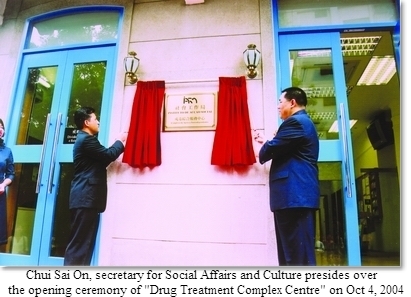
1. The
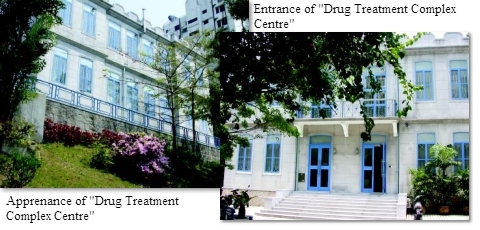
opening ceremony of The major functions of DTCC are the followings:
1.1) Outpatient Clinic In
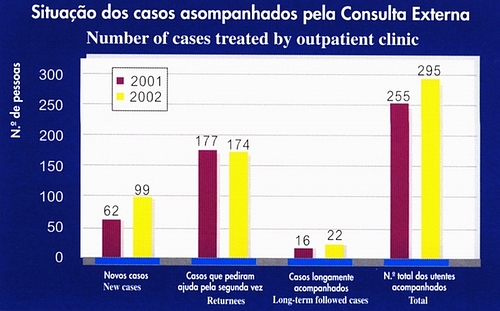
2002, 295 voluntary clients were treated (See Chart 1), 99 were
new cases, 174 were returnees and 22 were long-term followed cases.
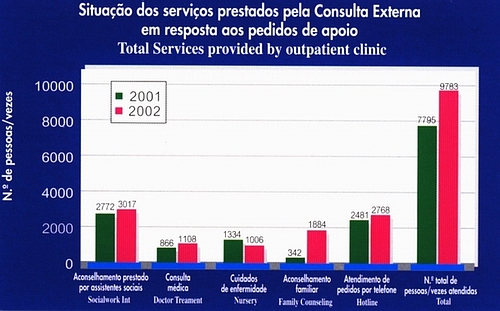
The total number of various service provided in 2002 is 9,783 (See
chart 2). With compare to the number of previous year, the total
number of admitted cases increased about 15.7%, new cases and long-term
followed cases increased 59.7% and 37.5% respectively, the number
of returnees was almost the same as the previous years. The total
number of services provided increased 25.5%(See chart2).
Chart 1: Outpatient cases significantly increased compared with previous year. The total number of cases increased 15.7%, new cases and long-term followed cases increased 59.7% and 37.5% respectively, the number of returnees was almost the same as the previous year.
Chart 2: The total number of services increased 25.5% with compared to the previous year, Various services such as urine test, family-therapy, and free physical checkup provided in 2002 was the main reason for this increase
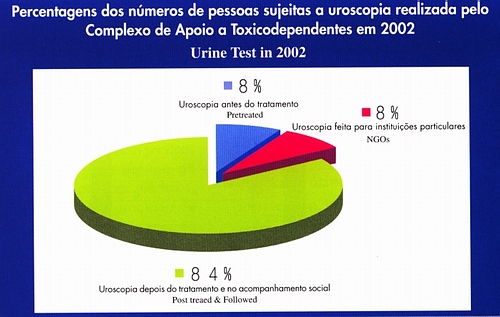
Chart3. In 2002, about 84% of the 2,751 tests were post-treatment or follow-up cases. This practice takes an important role for evaluating the effectiveness of treatment.
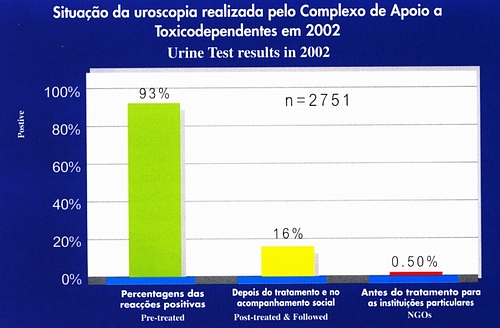
Chart 4. The percentage of positive result in pretreatment group was the highest, this means that most cases still took drugs before treatment. However, the positive percentage dropped to 16% after treatment or under followup program. The positive percentage in NGOs was relatively even lower, only 0.5% was recorded. Among
the 2751 urine tests in 2002, follow up cases took 84%, within these
follow-up tests, only 16% cases were found positive, therefore 84% of the
followed cases were supposed to be abstinent. Medical Diagnosis and Treatment After the June of 2002, DTCC began to provide free physical checkup for clients from outpatient clinic and NGOs treatment centers, checkup items include HIV, hepatitis B & C, syphilis, hemograms and urine test, tuberculosis and other biochemical tests. This practice is mainly for the control of infectious diseases among high risk group. Blood and urine samples were collected in DTCC, then sent to Health Bureau for analysis. Results were primary evaluated by DTCC doctors, further treatment would be arranged for those infected clients. This one-stop service helps collecting samples more effectively, and therefore provides more accuracy estimation of the epidemiology of various infectious diseases.>>> A referral
system was setup for those infected cases and their family members, relevant
treatment would be provided by different specialist in the hospital. From
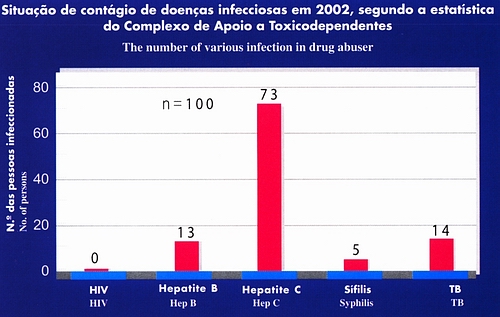
June to December of 2002, 145 tests were conducted, which included 100
cases and 37 co-workers. High hepatitis B&C infection rate merits attention. (See
Chart 5)
Chart 5. In the second half of 2002, 108 test samples from 100 cases were collected, hepatitis B and C infection rates were high enough to catch our attention. Psycho-social intervention Professional
counseling aims on motivation enhancement and treatment goal setting was
guided by social works. Assessment and treatment goals include 5 important
aspects. 1)helping clients to realize their own realities, e.g. social
relationship, 2) building up confidence for change, 3) elaborating their
reasons for changes, 4) helping to develop positive alternative activities,
5) practicing possible techniques for relapse prevention. Other therapeutic
treatments include job training, emotional control, normal life-skill, crisis
intervention, etc. In 2002, provided Prycho-Social intervention 3,017
persons/times (see Chart 2). Follow-up and Rehabilitation Successful
treatment includes social and family re-integration,
social workers in CDTC provide family guidance to assist family members to
develop realistic attitude and techniques for the recovery process. Abstinent
client who adopts the routine urine tests can apply subsidies from CDTC when
they have financial difficulties. In 2002, 1884 family services were
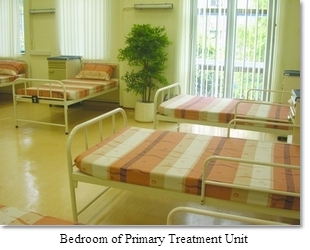
provided, About 30 clients per month received subsidies from DTCC. 1.2 Primary Detoxification Unit This
unit provides short term inpatient detoxification treatment for drug addicts
who are not suitable for outpatient treatment. Inpatient treatment usually
lasts 14 days, both clonidine and buprenorphines therapies are provided.
Application of inpatient detoxification should be arranged and transferred by
outpatient clinic. Physical checkup is the primary procedure for the
application.
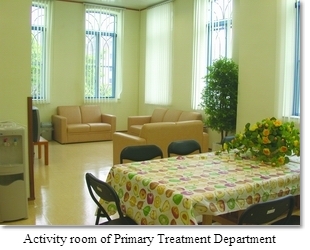
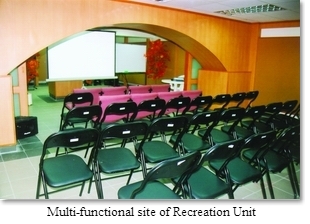
1.3 Recreation Unit Recreation
unit is a supplemental facility for the primary detoxification unit and
outpatient clinic, it's a place for those recovering cases. It includes
reading area, exercise area, and activities area. Activities such as seminar,
exhibition, training, games, KaraOK, etc. were held
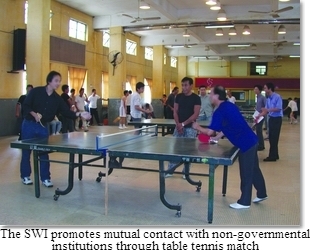
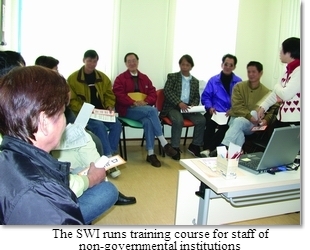
regularly. Other kind of activities for non-governmental treatment centers
including table tennis competition, staff training programs are also held in
the same place.
2. Technical and financial support for non-governmental treatment organization In
2002, 7 services provided by 4 non-governmental organizations were
financially supported by Social Welfare Institute,
these 4 NGOs are Macao Teen challenge, Association of Rehabilitation of Drug
Abusers of Macao, Macao Christian New Life Fellowship and Macao Renovation
and Mutual Assistance Association. These four organizations provide long term
rehabilitation service¡Aoutreach work, and self-help
group for drug addicts and ex-addicts. The total capacity of long term
residential treatment is about 66 persons. Recipients of such services in
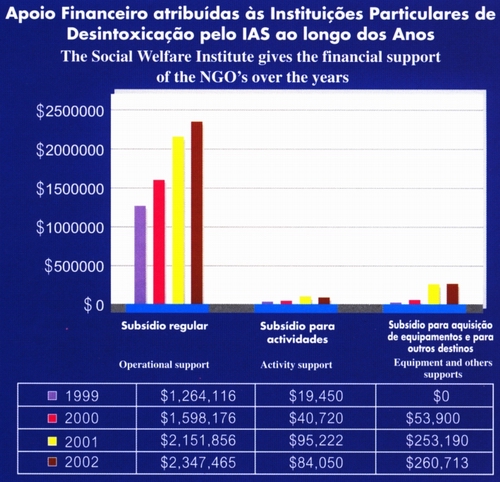
2002 were about 698 persons times The following
chart shows the details.
Compared
to 2001, financial support for rehabilitation services provided by SWI was
increased to improve service quality by importing new rehabilitation
activities and professional co-workers. Employment of social worker by each
organization was the big step for the improvement. The detail financial
supports are briefly showed as follows:
The major technical supports provided in 2002 are summarized as below. * Hardware: The
original place for female center of Teen challenge was no longer available
due to the A-Ma culture village project. New female center was planned to
move and build beside the male center of Teen challenge. The construction was
sponsored by Social Welfare Institute. Building was under construction at the
late 2002. Teen
challenge, ARTM, RMMAM were supported to recruit social workers. Recreational
equipment include musical and physical exercise equipment were supported, and
fire safety system was installed or checked for all centers. Health
and Occupational safety seminars were held regularly for all NGOs. One
professional cleaning team organized by Renovation and Mutual Assistance
Association (RMMAM) of
3. Special
tasks and events *
In order to effectively control spread of infections diseases among the
drug-use related people, Memorandum of cooperation with Health Bureau was
signed, regular body check was provided for drug addicts and co-workers. *
2 doctors and 5 nurses were employed in 2002 for DTCC. *
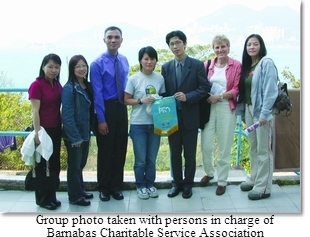
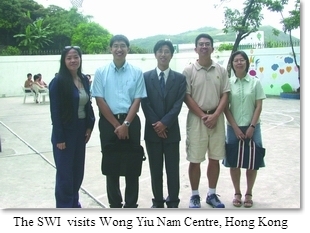
In 2002, Treatment and Social Rehabilitation for Drug Dependence Division
staffs visited *The
opening ceremony of
*Cooperation
memorandum was signed by Treatment and Social Rehabilitation for Drug
Dependence Division and Renovation and Mutual Assistance Association. RMMAM
organizes ex-addict worker for DTCC. Treatment and Social Rehabilitaion for
Drug Dependence Division provides vocational training and practical job for
ex-addict workers. Cleaning and garden maintaining are the major jobs for
these workers. *Treatment
and Social Rehabilitation for Drug Dependence Division staffs were sent to
*A
table tennis champion cup was held in November, clients and colleagues from
varies treatment centers were invited. *3rd
Workshop on HIV Surveillance and Epidemiology in the Pearl River Delta Region
was held in Shenzhen, DTRD sent representatives to the meeting. Article about
the epidemiology of varies infectious disease among drug addicts in *A
certificate course for treatment and rehabilitation of drug addicts was held
from November to December. Course contained 10 individual modules including
anti-drug abuse policy, treatment and rehabilitation approaches, associated
infectious diseases, types of abused drug, basic counseling skill, relapse
prevention, etc. This certificate course was mainly for workers of NGOs
treatment centers. *Most
of the goals for service commitment was achieved in
2002, new items and goals were renewed. New objective mainly aimed at
reducing the waiting time for outpatient treatment, and goal of success was
set to 95%. 4. Future prospect
In respect
of assistance of NGOs, construction of Female center of Teen
challenge would be finished in 2003. SWI will prepare fund and
technical support for equipment, staffing, and operation. The
re-construction of Male center of Teen challenge will be planned
and evaluated in the mid 2003. |
|||||||||||||||||||||||||||||||||||||||||
|
|
|||||||||||||||||||||||||||||||||||||||||
 As
some new programs and service were provided in 2002, operational
procedures and practices, especially the inpatient treatment
service, were under evaluated. DTRD's service keeps on improving.
Clinical research would be an important part of the CDTC, data
from physical checkup and inpatient observation would generate
comprehensive understanding of the detoxification process, new
medication method would be studied in the near future.>>>>>>>Research
project, which aimed on treatment and rehabilitation programs
for drug abuse, was completed in the late 2002, the final report
and result was supposed to be published in the early 2003. Treatment
practice will be analysis, improvement step would be planned
according the result of the research to ensure the high effective
services.
As
some new programs and service were provided in 2002, operational
procedures and practices, especially the inpatient treatment
service, were under evaluated. DTRD's service keeps on improving.
Clinical research would be an important part of the CDTC, data
from physical checkup and inpatient observation would generate
comprehensive understanding of the detoxification process, new
medication method would be studied in the near future.>>>>>>>Research
project, which aimed on treatment and rehabilitation programs
for drug abuse, was completed in the late 2002, the final report
and result was supposed to be published in the early 2003. Treatment
practice will be analysis, improvement step would be planned
according the result of the research to ensure the high effective
services.